

METAB-OMICS unit research projects
The METAB-OMICS Unit – “Multi-omics and Pathophysiology of Metabolic Diseases”, led by Amélie Bonnefond, brings together researchers, clinicians, educators, engineers, and technicians to study metabolic diseases such as diabetes, obesity, and their complications in an integrated manner.
The unit operates under the supervision of CNRS, Inserm, the University of Lille, the Institut Pasteur de Lille, the CHU Lille is organized into two accredited research teams. Thanks to its multidisciplinary expertise, the METAB-OMICS Unit develops integrative approaches to better understand the mechanisms underlying metabolic diseases and to contribute to the advancement of precision medicine.
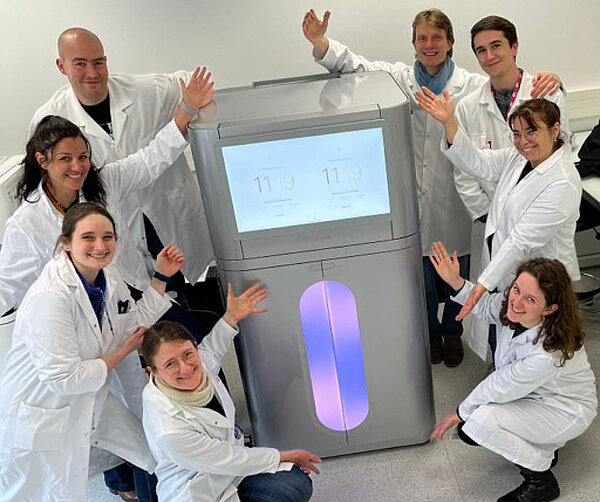
Team 1
“(Epi)genomics of Metabolic Diseases” led by Amélie Bonnefond (DR1 Inserm)
Team 1 investigates the genetic and epigenetic bases of metabolic diseases using next-generation genomic and multi-omics approaches. The team focuses in particular on common multifactorial forms of type 2 diabetes and obesity (so-called polygenic forms), as well as rarer forms, known as monogenic, in which a single mutation can be sufficient to cause the disease. The objective is to identify new genes and signaling pathways, including epigenetic mechanisms, involved in these pathologies, in order to improve understanding, contribute to the discovery of new therapeutic targets, enhance patient stratification, and support the development of precision medicine approaches.
The scientific activities of this team rely on the LIGAN platform, specialized in multi-omics technologies primarily based on next-generation sequencing (NGS) and large-scale genomic analysis.
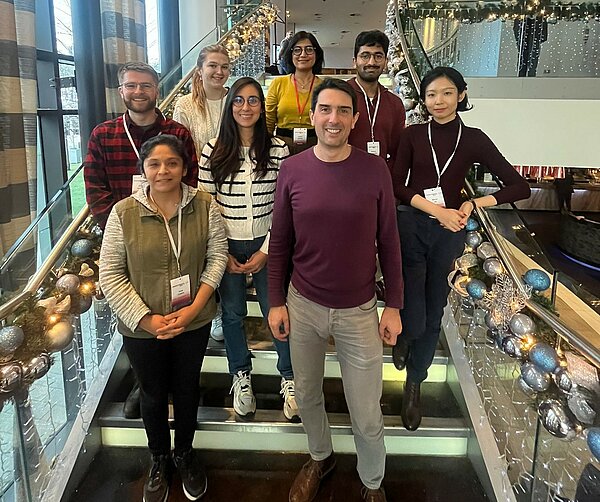
Team 2
“Metabolome, Microbiome, and Metabolic Diseases,” led by Marc-Emmanuel Dumas (DR2 CNRS)
Team 2 studies the interactions between the metabolome, the microbiome, and the pathophysiology of metabolic diseases. The team’s research focuses in particular on the role of the metabolome in cardiometabolic diseases to better understand the mechanisms of integrated metabolic regulation, combining genomics, microbiomics, and systems biology approaches. The team is especially interested in the influence of the microbiome and its metabolic products on metabolic and cardio-respiratory diseases. It uses metabolomics to identify new biomarkers and decipher the mechanisms involved in these pathologies, as well as in chronic inflammatory processes, including neuroinflammation.
The scientific activities of this team rely on the IMPACT-PM technology platform, dedicated to mass spectrometry-based metabolomics, with particular expertise in the study of microbiota-derived metabolites.
![[Translate to English:] CNRS](/fileadmin/_processed_/e/0/csm_logo_cnrs_274335e841.jpg)
![[Translate to English:] INSERM](/fileadmin/_processed_/e/4/csm_InsermSeul_cmjn_noir1_e88da3c290.jpg)
![[Translate to English:] Institut Pasteur de Lille. Vivre mieux, plus longtemps](/fileadmin/_processed_/9/9/csm_logo-IPL-2026_f3e6adc794.jpg)
![[Translate to English:] CHU Lille](/fileadmin/_processed_/0/5/csm_CHU_Lille_Logo_20e33338e9.png)